

Skiing in Lofoten
When is the best time to ski in Lofoten?
February, March and April are generally the best months for ski touring in Lofoten. The days are getting longer, the light has returned, and there is normally plenty of snow in the mountains.
March usually offers more winter-like conditions, with the possibility of cold, dry snow on many aspects. As we move into April, the sun has an increasing effect on the snowpack, particularly on south-facing slopes. At the same time, you can still find winter snow at higher elevations and on north-facing terrain.
Lofoten is located far out on the Norwegian coast, exposed to the Norwegian Sea, and the weather can change quickly. Wind, precipitation and temperature can vary considerably over a short period of time – and conditions can sometimes be very different from one part of Lofoten to another.
Windy and Yr.no are useful tools for getting an overview of the weather forecast. However, we pay the most attention to the latest forecasts and the actual conditions as the day of the tour approaches. Long-term forecasts for Lofoten can change significantly, so there is rarely any reason to worry too much about a forecast several days in advance.
An important part of ski touring in Lofoten is being flexible. With local knowledge and good decision-making, it is often possible to find excellent skiing even on days when the weather forecast doesn’t look perfect.
Climate and avalanche conditions
Lofoten has a typical maritime coastal climate, with frequent changes in weather and relatively few prolonged periods of consistently cold temperatures. Winter temperatures often fluctuate around freezing, although conditions can vary considerably.
Low-pressure systems arriving from the ocean can bring strong winds, precipitation and warmer temperatures. Mild weather and rain can sometimes affect the snowpack high into the mountains. These weather changes can quickly transform the snowpack and influence the avalanche problems we need to consider.
Persistent weak layers can occur in Lofoten, particularly following longer periods of cold and stable weather, and they must always be taken seriously when present. However, wind slabs are one of the most common avalanche problems in the region.
Wind slabs form when the wind transports loose snow and deposits it in sheltered areas. This can create cohesive slabs resting on weaker snow underneath. Conditions can change quickly when the wind increases or changes direction, which is why understanding wind, snowfall and snow transport is an important part of planning a ski tour in Lofoten.
For updated information about avalanche danger and current avalanche problems, we use Varsom.no. On our guided ski tours, we also continuously assess the weather, snowpack and local conditions, adapting each day’s objective to the conditions.
For updated avalanche forecasts we use varsom.
Experienced guides with local knowledge creating unique mountain experiences in Lofoten
A typical ski touring day in Lofoten
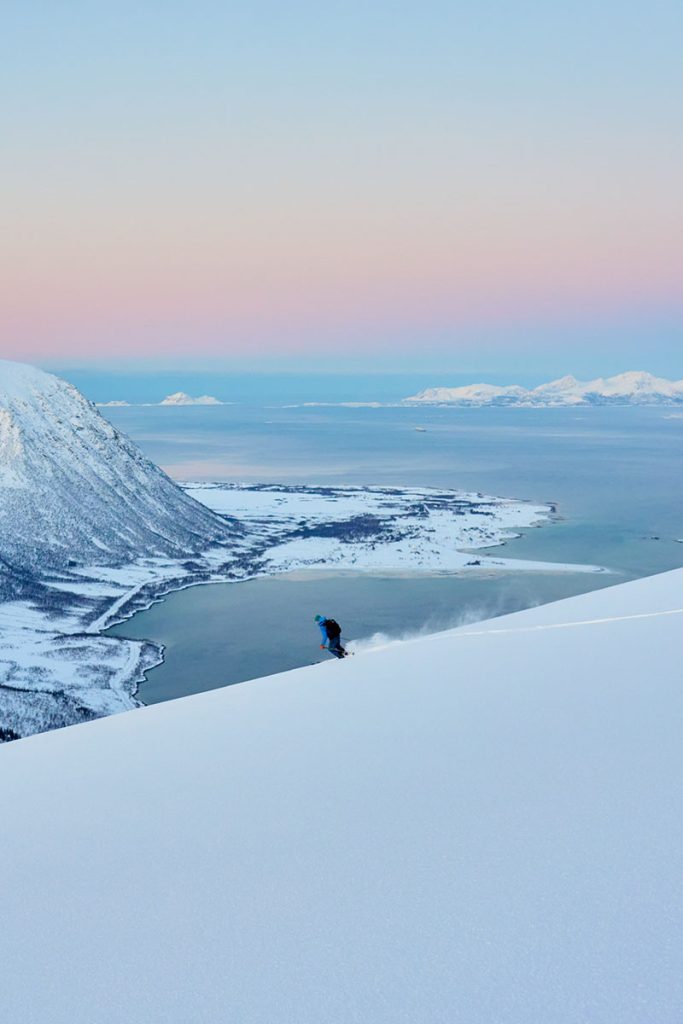
A ski tour in Lofoten often starts right by the sea. From sea level, we skin upwards with views across the Vestfjord, the open ocean and the surrounding mountains. The tree line is low, and it doesn’t take long before the landscape opens up around you.
Above the tree line, Lofoten has a truly alpine character. Sharp peaks rise directly from the sea, creating a landscape that can feel almost like the Alps – except here, you are surrounded by ocean.
Higher in the mountains, you can often see large parts of the famous Lofoten Wall, with the Norwegian mainland visible across the Vestfjord. During the winter and spring, you may also see the fishing fleet below, taking part in Lofoten’s traditional Arctic cod fishery.
There are often several options for the descent. When conditions allow, we like to make a traverse or a loop, ascending one way and skiing down another. This gives the day an extra dimension, with new terrain and views throughout the tour.
From summit to sea
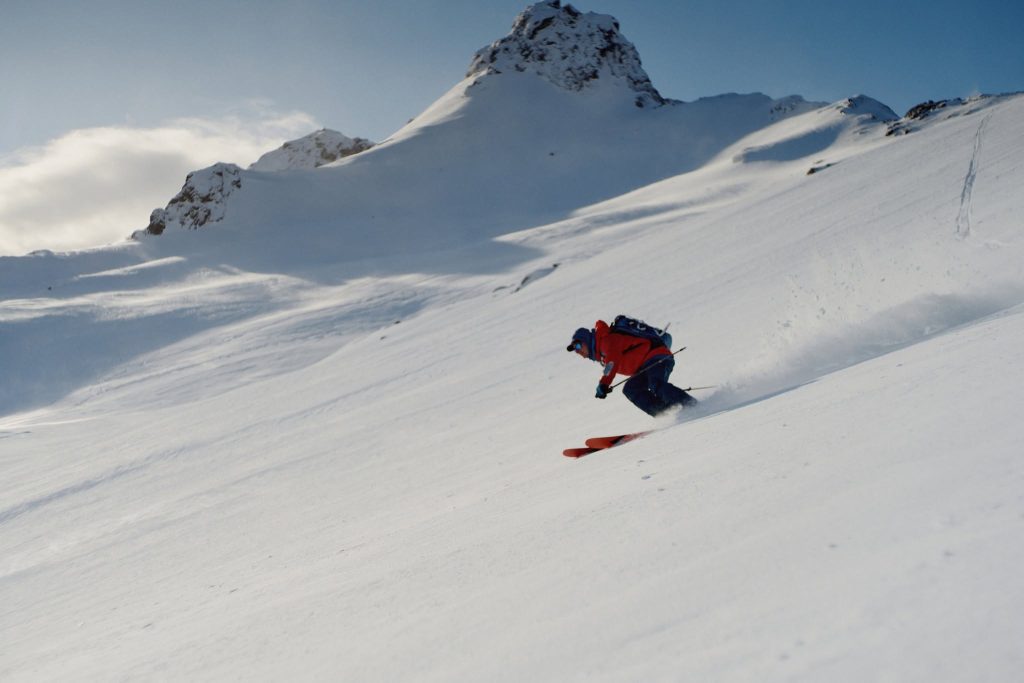
The descents are what make ski touring in Lofoten truly special. You can stand on a mountain summit with the ocean far below and ski all the way back down towards sea level.
The combination of alpine mountains, ocean, Arctic light and incredible ski terrain has made Lofoten a renowned ski touring destination.
From summit to sea – this is ski touring in Lofoten.

Famous trips in Lofoten
Some of the classic trips in Lofoten are:
- Varden
- Torskmannen
- Store Kvitind
- Svarttind
- Geitgallien
- Rundfjellet
- Sautind/Pilan
- Himmeltind

